You’re scrolling through property listings in Lagos. A one-bedroom flat in Lekki costs ₦5.5 million annually. A two-bedroom in Ikeja is ₦3 million. Meanwhile, your salary hasn’t changed in two years, and the exchange rate keeps climbing.
You need a place to live that doesn’t eat 60% of your income.
You’re here because you might be dealing with:
- Landlords demanding two years upfront when you barely saved one year’s rent
- Nice apartments in your budget, located in areas with no electricity, terrible roads, or 3-hour commutes
- Cheap rent that turns expensive once you add transport costs, generator fuel, and unreliable internet
- Neighborhoods that look good online but flood every rainy season or have zero security
You’re not alone. Lagos rent has gotten out of control, especially in popular areas. But affordable options still exist if you know where to look and what trade-offs make sense.
This guide shows you some of the most affordable neighborhoods in Lagos, what you’ll actually pay, and what “affordable” really means when you factor in commute, utilities, and quality of life.
1. Ikorodu (Mainland East)
Ikorodu offers significantly lower rent than central Lagos. The trade-off is distance from major business hubs.
Rental prices:
- 2-bedroom: ₦400,000 – ₦800,000 annually
- 3-bedroom: ₦500,000 – ₦1 million annually
Why it’s affordable: Larger homes, more outdoor space, and quieter neighborhoods, you get more square footage for your money compared to island locations.
The catch: Long commute if you work in Victoria Island, Lekki, or Ikoyi. You’ll spend 2-3 hours daily in traffic unless you travel very early or very late.
Best for: Remote workers, families who prioritize space over location, people whose offices are on the mainland.
What to check before renting:
- Transport links: Is there BRT access or reliable danfo routes?
- Road conditions: Some streets flood during the rainy season
- Security: Varies significantly by street, ask neighbors
2. Agbara (Ogun State – Western Lagos Border)
Agbara technically sits in Ogun State but serves the Lagos market. It offers some of the best value near Lagos with better infrastructure than many inner Lagos suburbs.
Rental prices:
- 2-bedroom: ₦300,000 – ₦600,000 annually
- 3-bedroom: ₦500,000 – ₦900,000 annually
Why it’s affordable: Located near major expressways and industrial zones. Many communities benefit from newer estates, reliable power, and better roads than you’d expect for the price.
The catch: You’re technically outside Lagos. Commute to island areas takes 2+ hours each way.
Best for: People working in industrial zones (factories, manufacturing), families who prioritize infrastructure over centrality, and remote workers who occasionally travel to Lagos.
Standout development: Southfields by Aspire Homes
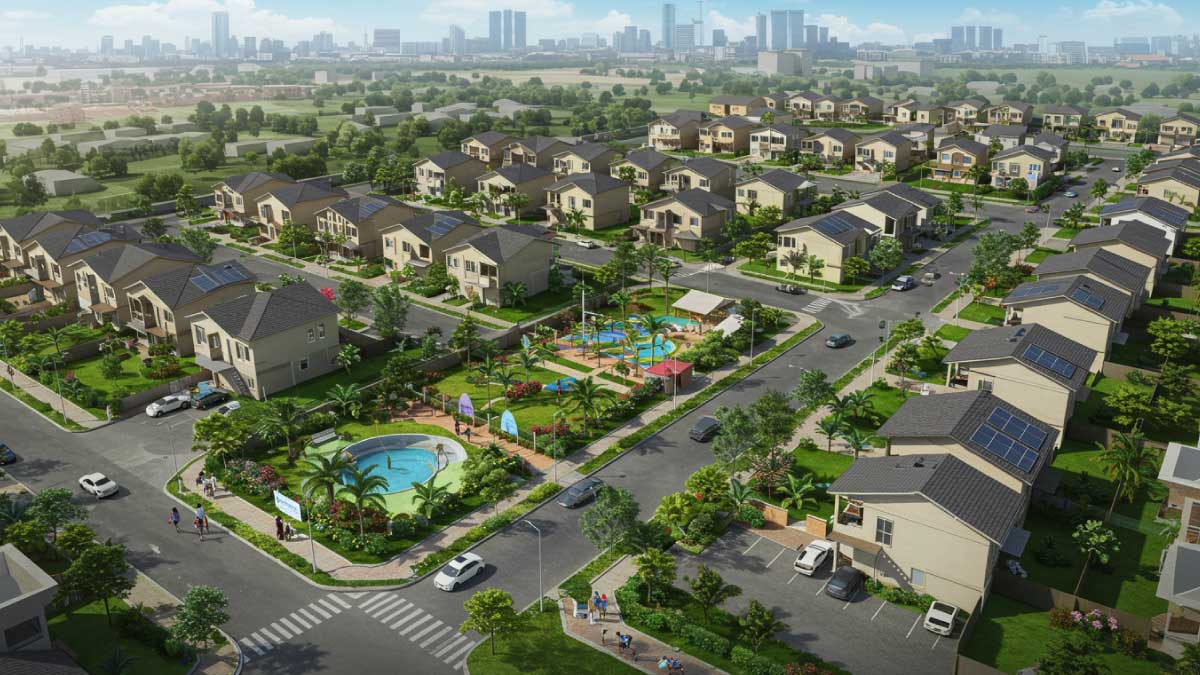
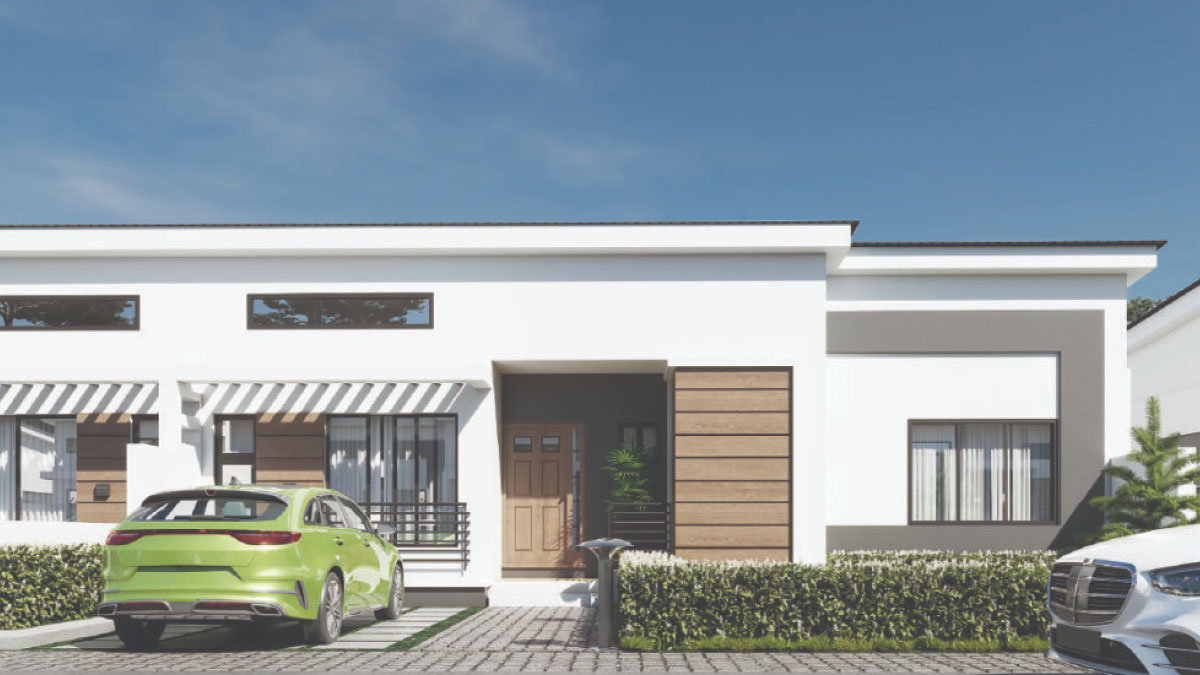
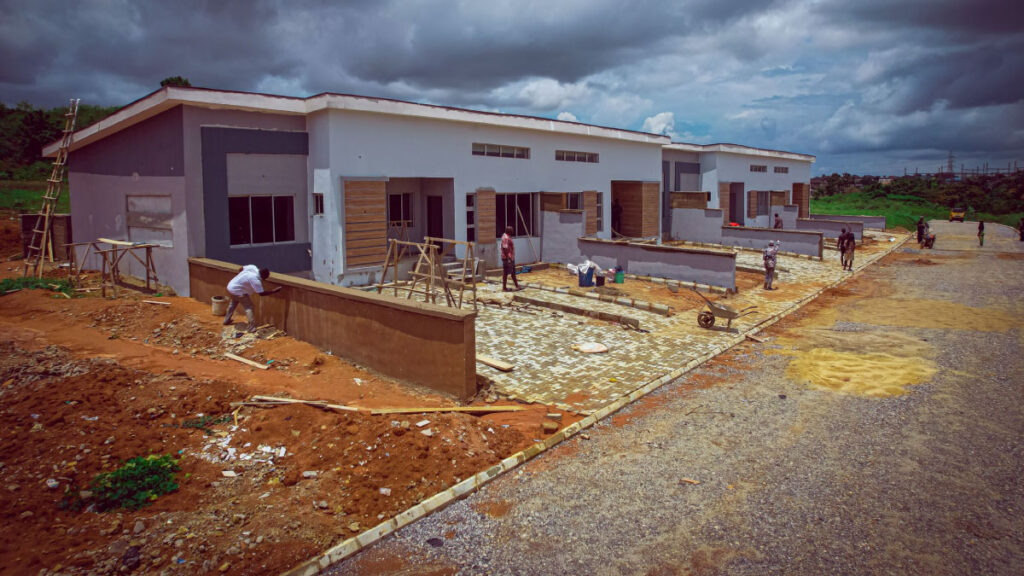
Southfields Estate redefines what affordable housing looks like outside Lagos. This modern gated estate in Agbara offers 2- and 3-bedroom bungalows with features you’d normally find in high-end developments:
- 24/7 power supply (no generator needed)
- Fibre-optic internet built in
- Solar streetlights
- Green parks and recreational areas
- Round-the-clock security
- Reliable road network and drainage systems
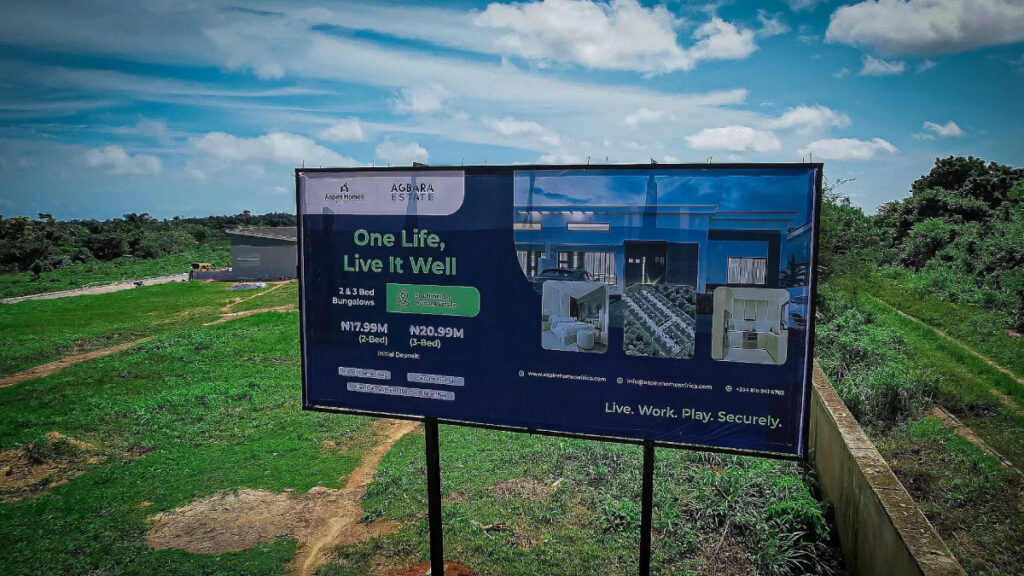
Pricing for homeowners (not rent):
- 2-bedroom bungalow: From ₦17.99 million initial deposit
- 3-bedroom bungalow: From ₦20.99 million initial deposit
- Flexible payment plans available
Why Southfields matters: It proves quality housing doesn’t require living in central Lagos or paying premium prices. Modern architecture, durable materials, energy-efficient designs, and community amenities all in one location.
Location advantage: Near industrial zones means the job commute should be within 10-15 minutes. Residents save on commute time and fuel costs.
3. Agege and Alimosho (Mainland West)
Agege and Alimosho have long been known as affordable areas with reasonable proximity to commercial hubs.
Rental prices:
- 2-bedroom: ₦600,000 – ₦1.2 million annually
- 3-bedroom: ₦800,000 – ₦1.5 million annually
Why it’s affordable: You get proximity to Ikeja and mainland business districts without island pricing. Decent transport links, including BRT routes.
The catch: Infrastructure varies dramatically street-by-street. One street has tarred roads and reliable power, the next street floods and has no electricity for days.
Best for: Working professionals who need to be on the mainland, small families balancing cost and access.
What to check before renting:
- Inspect roads and drainage carefully (some areas flood badly)
- Check power supply reliability (varies by neighborhood)
- Test your commute during rush hour before signing
- Ask about security and neighborhood watch programs
4. Badagry (Far Western Lagos)
If your priority is maximum cost savings and you’re comfortable being far from the city center, Badagry offers the lowest rental prices in Lagos State.
Rental prices:
- 2-bedroom: ₦250,000 – ₦450,000 annually
- 3-bedroom: ₦350,000 – ₦500,000 annually
Why it’s affordable: You’re far from central Lagos. Demand is lower, so prices stay down. You get more space for significantly less money.
The catch: Long travel time to central Lagos (3+ hours each way during traffic). Limited job opportunities locally unless you work remotely or in the immediate area.
Best for: Remote workers who rarely travel to Lagos, retirees, families planning to stay put and build savings, and people with businesses in Badagry or nearby.
What to check before renting:
- Local amenities: markets, schools, hospitals nearby?
- Transport links: Can you reach Lagos when needed?
- Internet reliability: Essential if you work remotely
- Community safety and neighborhood quality
5. Ikotun / Igando and Adjacent Areas (Mainland)
Ikotun and Igando, located in Alimosho LGA, offer good value with better proximity to job hubs than outer areas.
Rental prices:
- 2-bedroom: ₦800,000 – ₦1.2 million annually
- 3-bedroom: ₦1 million – ₦1.5 million annually
Why it’s affordable: Closer to Ikeja and mainland business districts than Ikorodu or Agbara, but still significantly cheaper than island locations.
The catch: Still expect 1-2 hour commutes to island areas. Infrastructure quality varies by street.
Best for: Working professionals and small families who need mainland access but want lower rent than Ikeja proper.
What to check before renting:
- Security arrangements in the specific street
- Transport access to your workplace
- Road conditions and flood risk during the rainy season
- Power supply reliability
What Does “Affordable” Really Mean in Lagos?
In Lagos, affordable doesn’t simply mean the lowest rent. It means cost-effective living where rent, amenities, access, and comfort are all balanced.
Total cost of living matters
If you rent at ₦600,000 per year but your commute costs ₦300,000 annually in transport, utilities are unreliable, requiring constant generator fuel, and you’re replacing clothes damaged by bad roads, your true cost is much higher.
A slightly higher rent in a well-connected area with better infrastructure may be more affordable overall.
Calculate your true cost:
- Annual rent
- Transport costs (daily commute × 250 working days)
- Generator fuel or alternative power
- Extra security costs if the neighborhood requires it
- Time value (3 hours daily in traffic = 750 hours per year lost)
Infrastructure counts
Reliable power, internet, safe roads, and proper drainage have become essential, not optional. Areas with poor infrastructure penalize you with hidden costs and constant inconvenience.
Infrastructure checklist:
- Power: How many hours daily? Do you need a generator?
- Internet: Is fiber available? What’s the reliability?
- Roads: Tarred or pothole-filled? Passable during rain?
- Drainage: Does the street flood?
- Water: Borehole available, or do you buy water constantly?
Access to employment and amenities
Being near your job, schools, markets, and transport means better value. For many renters, places like Agbara may be further out, but better infrastructure and lower rent make it smart.
The price gap often compensates for the commute if you’re not traveling daily or if your work is nearby.
Safety and environment
Security and good neighborhood quality carry real weight. Affordable rentals that neglect safety, sanitation, or environment end up being poor value.
A home with basic amenities but decent security and clean streets is often more affordable in real terms than a cheap flat in an unsafe area.
What to assess:
- Neighborhood watch or security arrangements?
- Street cleanliness and waste management?
- Noise levels and general environment?
- Quality of neighbors and community?
Future potential
Rental areas where infrastructure is improving, new roads or rails are planned, or development is underway may cost less now but yield better living and value later. Affordable houses in Lagos today might become prime locations soon as the city expands.
How to Find the Best Rental Homes in 2025
To lock a good deal on affordable houses in Lagos, follow these tactics:
- Use verified listing sites and agents. Search for properties with clear documentation, amenities, and available infrastructure.
- Visit the neighbourhood at different times: Peak traffic hours, rainy seasons, to test the road and drainage issues.
- Check commute options: How many buses, is there rail access, and how long to major business hubs?
- Ask about utilities: Does the area have standby power, high-speed internet, and good drainage? Areas like Agbara and newer estates often invest in these.
- Negotiate terms: Many landlords are open to compromise if you demonstrate reliability.
- Budget realistically: Even “budget” homes may face rent increases if development jumps in the area.
Final Thoughts
Finding affordable houses for rent in Lagos is still very possible, but it requires trade-offs. Areas like Ikorodu, Agbara, Agege/Alimosho, Badadry, and Ikotun/Igando offer strong value for those willing to prioritise infrastructure and living comfort over city-centre prestige.
If you choose your location wisely, focus on neighbourhoods where infrastructure is improving and commute is manageable, you can secure a home that delivers both affordability and quality. With Lagos’ housing market continuing to evolve, the best deals often lie just outside the high-end zones — and the savvy renter knows where to look.